Thrown and fired in the Adelaide Hills · Dispatched from Adelaide
Stoneware for the table

Pots made to be picked up every morning

Mugs, bowls, plates and jugs in speckled stoneware — thrown on the wheel or cast in plaster moulds, glazed by hand and fired to 1280 °C. Heavy enough to feel settled, light enough to want.

See the twelve pieces
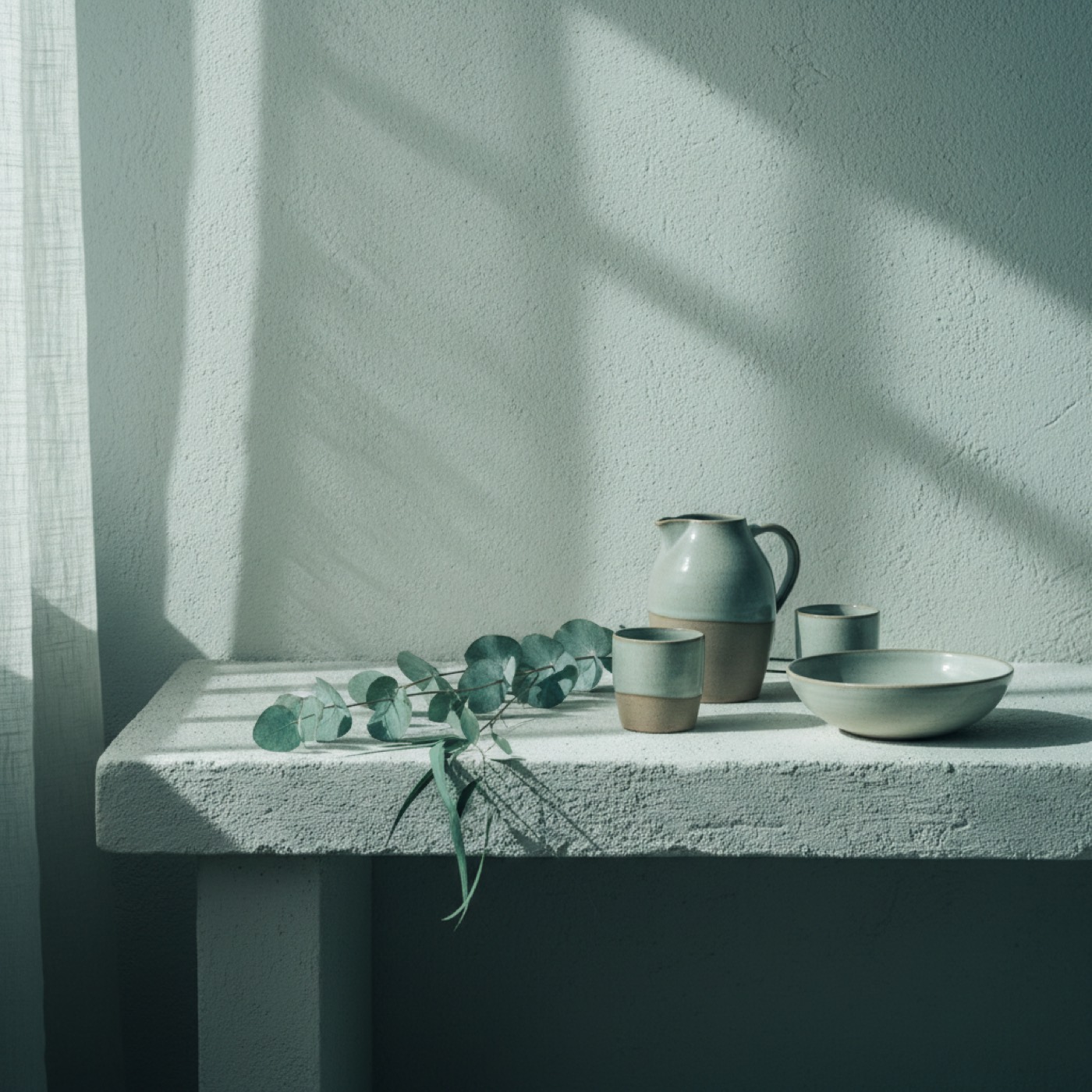
A breakfast table set with speckled stoneware mugs, bowls and side plates in morning light

Morning table — the Wattlebird mug, breakfast bowl and side plate in Eucalypt Ash satin.

01

Thrown or cast, never bought in

The mugs, bowls, jug and teapot are thrown on the wheel and trimmed the next day, when the clay is leather-hard. The plates and the butter dish are slip-cast — liquid clay poured into a plaster mould — because a flat plate warps if you throw it. Both are made here, in the same room, by the same two pairs of hands.

02

Glazed by hand, so it breaks

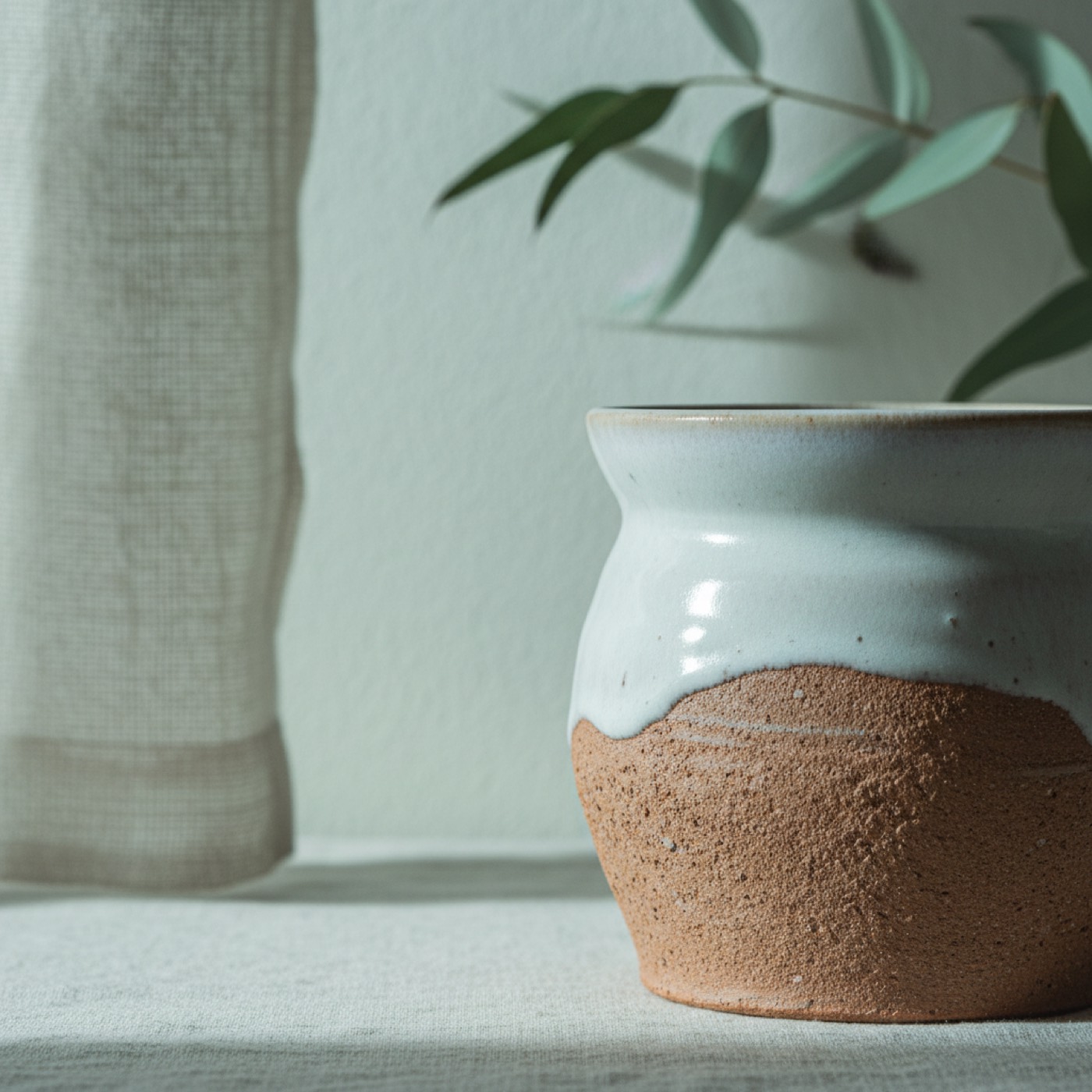
Every piece is dipped in glaze rather than sprayed. On a thrown wall the glaze runs thinner over each ridge left by the fingers and pools in the hollow beside it, so a pale line follows the throwing rings all the way up. Potters call that a glaze break. It is the reason no two of our mugs read the same in the light.

03

Fired twice, to 1280 °C

A bisque firing to 1000 °C hardens the raw clay so it can be handled and glazed. The second firing takes it to 1280 °C over thirteen hours, which vitrifies the body — the clay closes up and stops absorbing water. That is what makes it stoneware rather than earthenware, and it is why these go in the dishwasher without going chalky.

The range

Twelve pieces. Each one is listed with its finished dimensions, and anything that holds liquid is listed with what it actually holds, filled to a sensible line rather than the brim.

Freshly trimmed stoneware pots drying on a timber board in the studio

A morning's throwing, drying on the board before trimming. About one in twelve of these will crack in the drying and never make it to the kiln.

The studio

A shed at the back of the house, twenty minutes up the freeway

Eucalyptus Ware is Merryn Sayle and her brother Tom. Merryn has thrown pots for eleven years — six of them teaching evening classes in the city, the last five here, in a corrugated shed behind the house in the Adelaide Hills with a stringybark leaning over the roof and a kiln that trips the house circuit if you run the kettle at the wrong moment.

Merryn throws. Tom mixes the glazes, pours the moulds for the flatware and packs every order. There is nobody else. That is the honest reason the range is twelve pieces and not sixty, and the honest reason a restock takes three weeks rather than three days — a piece has to dry slowly, be trimmed, dry again, be bisque fired, be glazed, and be fired a second time. Rushing any one of those steps shows up as a crack.

We use a speckled buff stoneware body with iron through it. The specks are grains of iron that burn through the glaze in the second firing and freckle the surface — most obvious under the pale satin, almost invisible under the deeper greens. We chose it over a smooth white porcelain because it is forgiving, because it chips less brutally, and because it looks like the ground the studio sits on.

Merryn Sayle

Potter, Eucalyptus Ware

A potter's hands pulling the wall of a mug on the wheel, clay and water on the bench
Pulling a wall. The ridges left by the fingers here are what the glaze will break over eight days and two firings later.

Flat $15 delivery, Australia-wide

One rate anywhere in the country. Orders are packed in moulded straw board and dispatched within 3–5 business days from Adelaide. If a piece is out of the kiln queue we email you the date before we take the order any further.

Breakage and faults, 7 days

If something arrives broken or has a fault, send us a photo within 7 days and we replace it or refund it. We do not take change-of-mind returns — ceramics rarely survive a second trip through the post.

Every piece varies

Height and diameter run to about ±3 mm, and glaze colour shifts between firings depending on where a piece sat in the kiln. Yours will not be identical to the photograph. Stoneware is hard but not tough: knock a rim against a tap and it will chip.

Questions

Before you order

If yours is not here, email hello@eucalyptusware.com or call 0468 921 774. Merryn or Tom answers — usually the same day, occasionally the next if the kiln is being packed.

Can it go in the dishwasher and the microwave?

Yes to both, for everything in the range. The 1280 °C firing vitrifies the clay, so it does not soak up water and will not craze in the dishwasher the way a low-fired earthenware mug does. There is no metal or lustre in any of our glazes, so the microwave is fine as well. The one thing to avoid is a direct flame or an oven — these are table pieces, not bakeware, and thermal shock will crack them.

What is a glaze break, and is the pale line a fault?

It is not a fault, it is the point. When glaze is dipped rather than sprayed, it sits thinner on any raised edge and thicker in the hollows. On a thrown mug the fingers leave a shallow spiral of ridges up the wall, so the glaze thins over each ridge and shows the clay colour through as a pale line. On the satin glazes it reads as a soft ripple; on the deeper green it is quite pronounced. If a piece has no break at all it usually means the glaze went on too heavy, and that one stays in the studio.

Why is the bottom rim rough and unglazed?

Glaze melts to glass at 1280 °C. If it were on the foot, the piece would fuse to the kiln shelf. So the foot ring — the raised ring the piece stands on — is wiped bare before firing. We sand every foot on a diamond pad afterwards so it will not mark a timber table, but it stays matte and a little dry to the touch, which is what bare stoneware feels like. If you have a soft-finish table, a felt pad under a heavy serving bowl is still worth doing.

Will my mug match the one in the photograph?

Closely, but not exactly, and we would rather say that now than after it lands. Each kiln load sits at slightly different temperatures front to back, so the same glaze can come out a shade warmer or cooler between firings. The iron specks are random. Handles are pulled by hand, so the curve varies by a few millimetres. Dimensions run to about ±3 mm on height and diameter. If you are buying pieces to sit together at a table, order them in one go and we will pick them from the same firing.

How long until it arrives?

We dispatch within 3–5 business days from Adelaide, then it is standard parcel post: usually 2–4 business days to Adelaide, Melbourne and Sydney, 3–6 to Brisbane and Perth, and longer to regional, NT and far north addresses. Delivery is a flat $15 anywhere in Australia regardless of how much you order. We pack in moulded straw board rather than foam, and we double-box anything with a spout or a handle.

Something arrived broken. What now?

Email hello@eucalyptusware.com within 7 days with a photo of the piece and a photo of the box it came in — the box tells us whether it was crushed in transit or failed in the kiln, and that changes how we pack the next one. We replace it from stock or refund it, your choice. You do not need to send the broken piece back. This covers breakage in transit and manufacturing faults such as a crack through the wall or a glaze that has crawled; it does not cover a chip from a knock at home.

Can I order a set, or more than you have listed?

Yes. The Long Table gift set is the boxed version, but if you want six dinner plates and six side plates for a particular table, email us and we will put them in the next firing and quote the same per-piece price. Lead time on a made-to-order set is three to four weeks, because it has to go through both firings with everything else. We do not take on custom shapes, custom glaze colours or logo work — it is two people and one kiln.

How should I look after it?

Ordinary use is fine. Dishwasher, microwave, hot water, straight in the cupboard. Two habits worth having: do not stack the plates with grit between them, because unglazed foot rings will scratch a glazed face over time, and let a cold piece warm a little before you pour boiling water into it — sudden temperature swings are the one thing that reliably kills stoneware. Tea and coffee will not stain the glaze. If the bare foot picks up a grey mark from a benchtop, a wet melamine sponge takes it straight off.

Do you sell wholesale or through shops?

Not at the moment. Everything we make goes through this site. We have had approaches from a few Adelaide and Melbourne stores and the answer for now is no — the kiln does one firing a week and we would rather that went to people who ordered directly than to a shelf. If that changes we will say so here first.